
Home Away From Home
Ten migrant workers from Mexico live together in a house on a Graves County farm. Their labor is poured into another man’s property, but their spirits have created a community of their own.
After working with migrant workers from Mexico for the last 11 years, Jerry Barber still communicates using hand signals. Jerry Barber has six new migrant workers who have never harvested sweet potatoes before, so he communicates to Saul Mortinez, a more experienced migrant worker, what must be done, and Mortinez tries to translate. It will take four days of work to clear one sweet potato field.
Many of the men express that the distance from Kentucky to Mexico mirrors the emptiness in their heart. Angel Rodriguez Castillo, 34, is one of those men at Jerry Barber Farms that misses home. During his birthday, he walked outside to speak with his wife Yadira Lopez on the phone while other workers watched TV, listened to music, and prepared dinner. Castillo and the other migrant workers use calling cards in order to afford the long-distance calls home. After the call, Castillo looked at pictures of his son Maximo, 1.
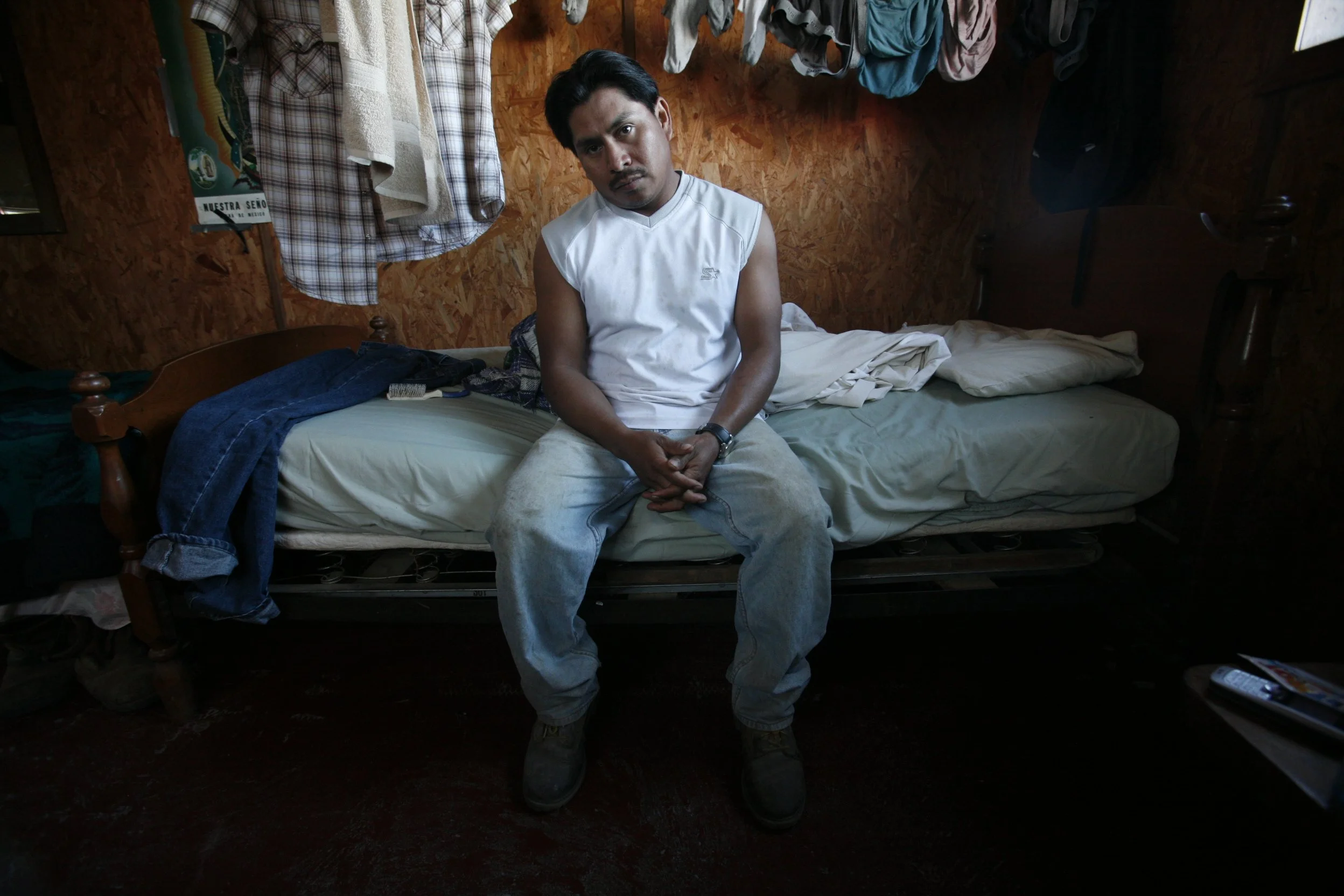
Saul Martinez, 29, the second-longest working migrant worker on the Barber farm, poses for a photo on his bed. Martinez is one of the trusted men to help translate for other workers.
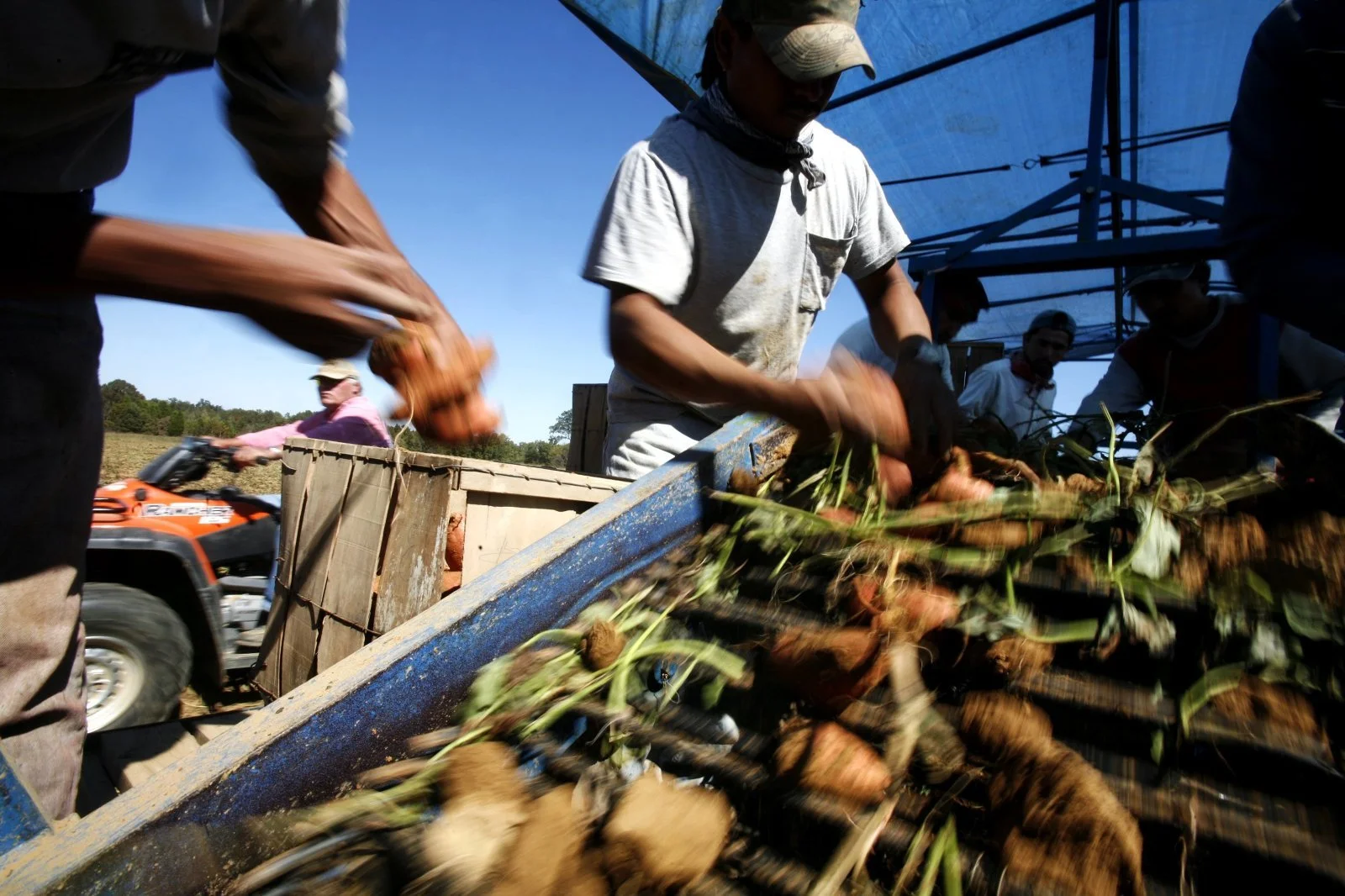
Lino Cortes and Saul Martinez pull potatoes off the picker and sort them by class while Jerry Barber goes to check on the other workers, whose relationship with the workers is less personal than his son’s. Jose Guadalupe refers to Jerry as distant. He respects their space and doesn’t come around much. Jerry explains that he does not feel it necessary to stay with the men in the fields.
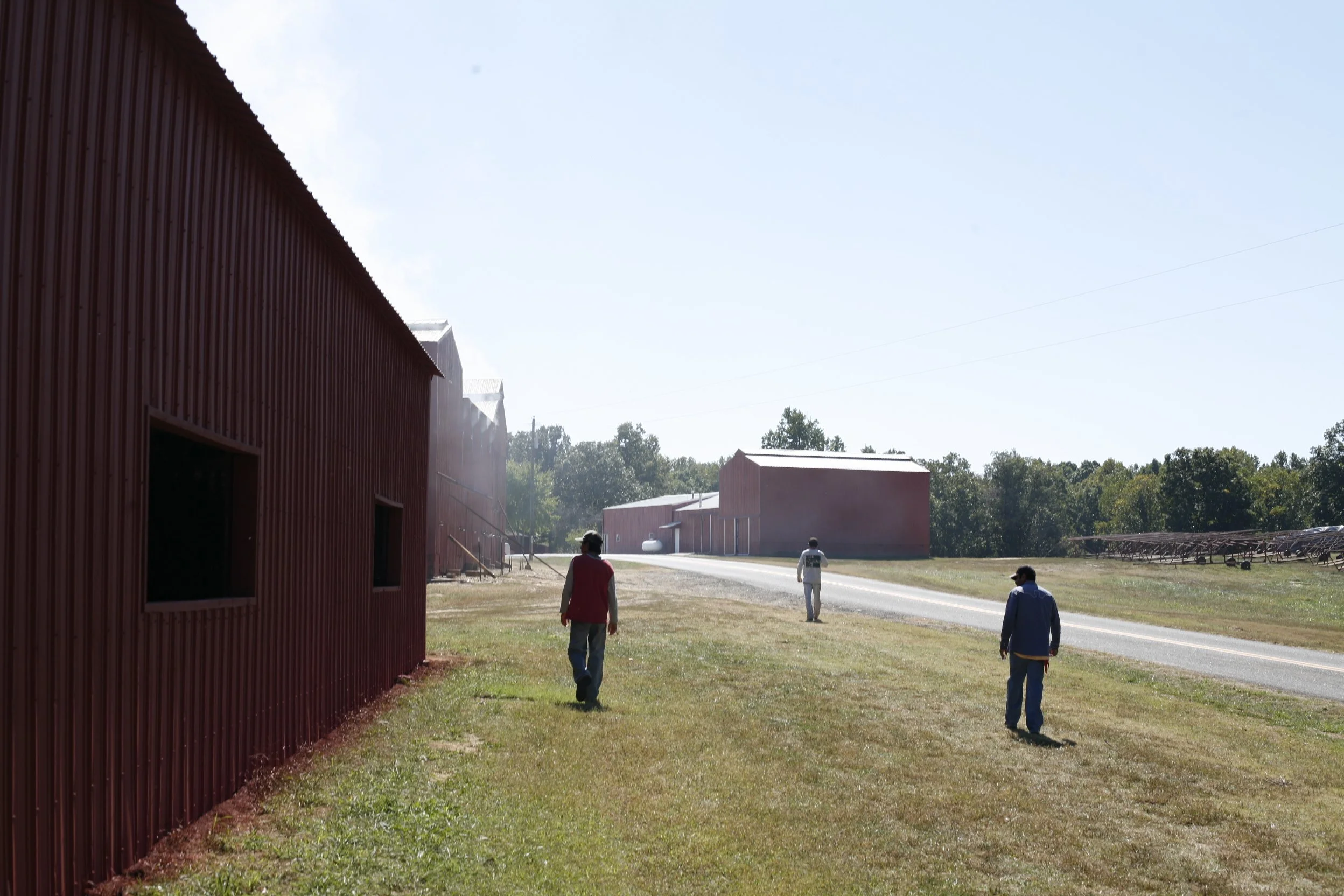
Migrant workers walk towards the fields on the farm.
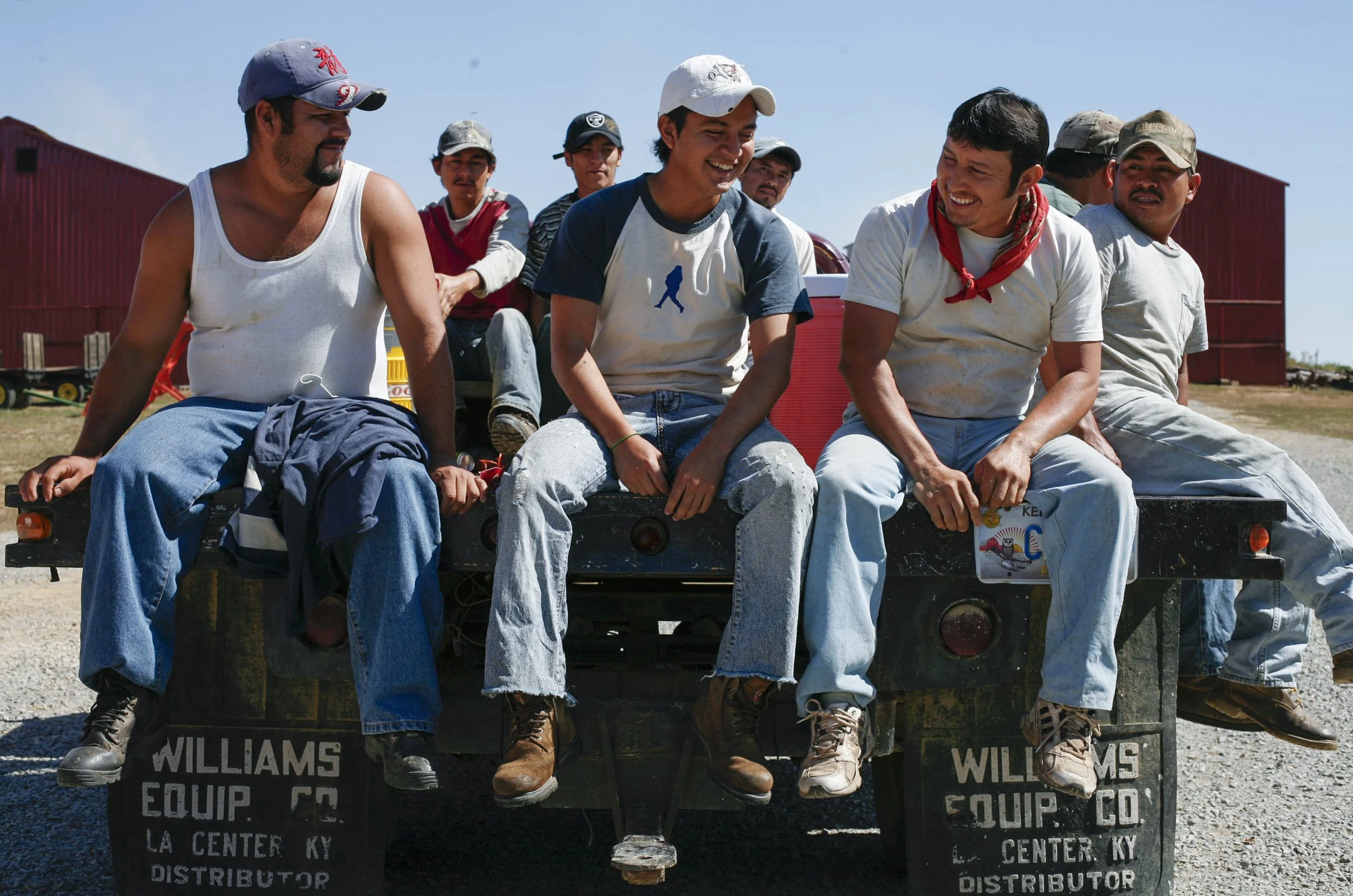
Migrant workers ride on a flatbed trailer to their next job on the farm.
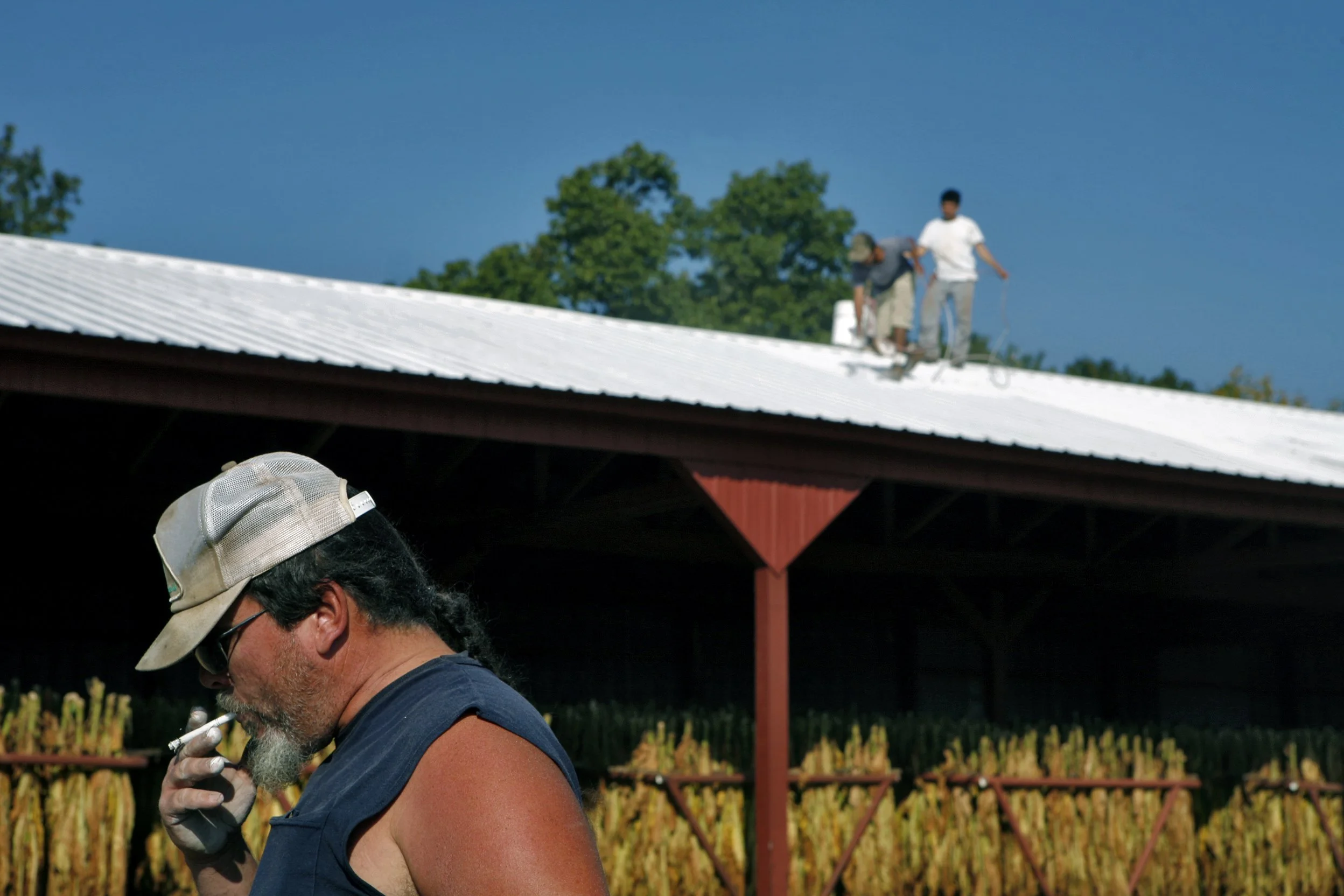
Chad Barber takes a smoke break while the migrant workers on his family farm, Cortes and Rodriguez, finish spray painting the top of the tobacco barn’s roof.
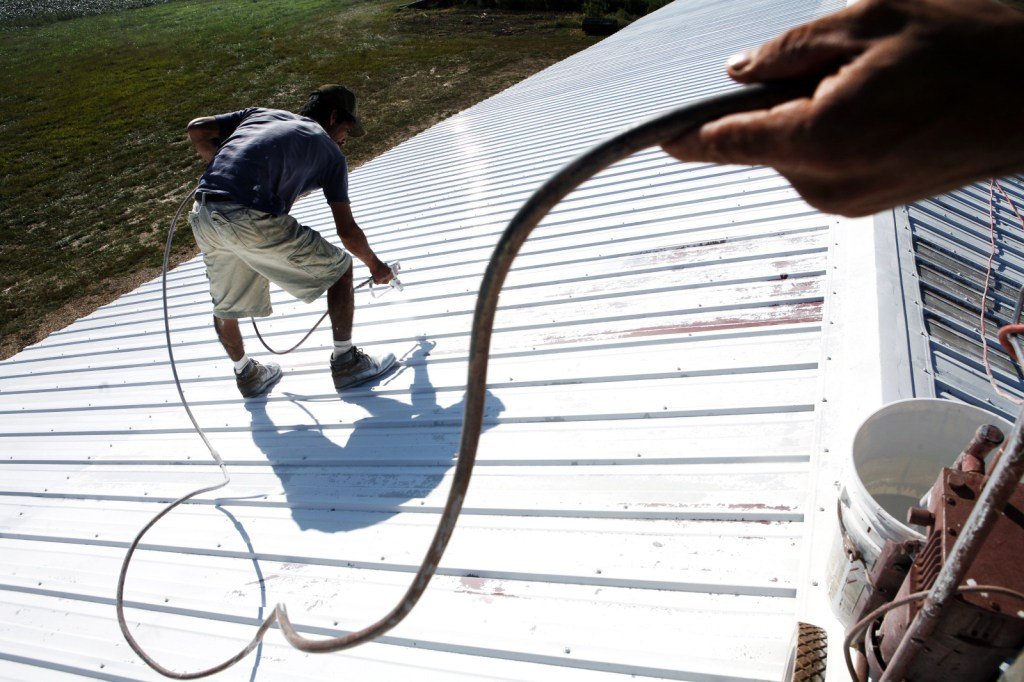
The smell of fresh paint permeates in the air on the roof of a barn that stores tobacco waiting to be dark-fired. Two men, Cortes, right, and Angel Rodriguez Castillo, 34, balance themselves on the recycled tin surface to spray the roof as they continue the de-rusting process. On slow days only a select few of the migrant workers on Barber’s farm have the opportunity to work.
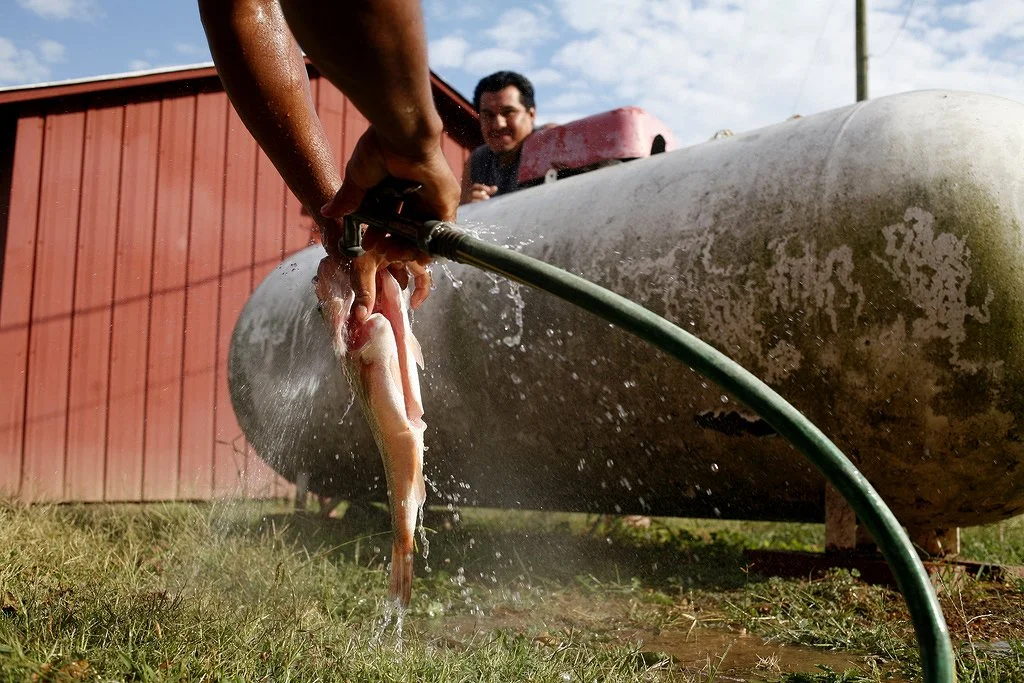
After stringing together a used Gatorade bottle, fishing line, hook and grasshoppers caught on his way to the pond, Martinez went fishing. He used a hose to clean a bass he caught, while fellow worker Nestor Felipe Monroy watches. The fish was dinner for the next day. Among fishing, soccer and poker are also common activities when the men find downtime in their 12 hour work days.
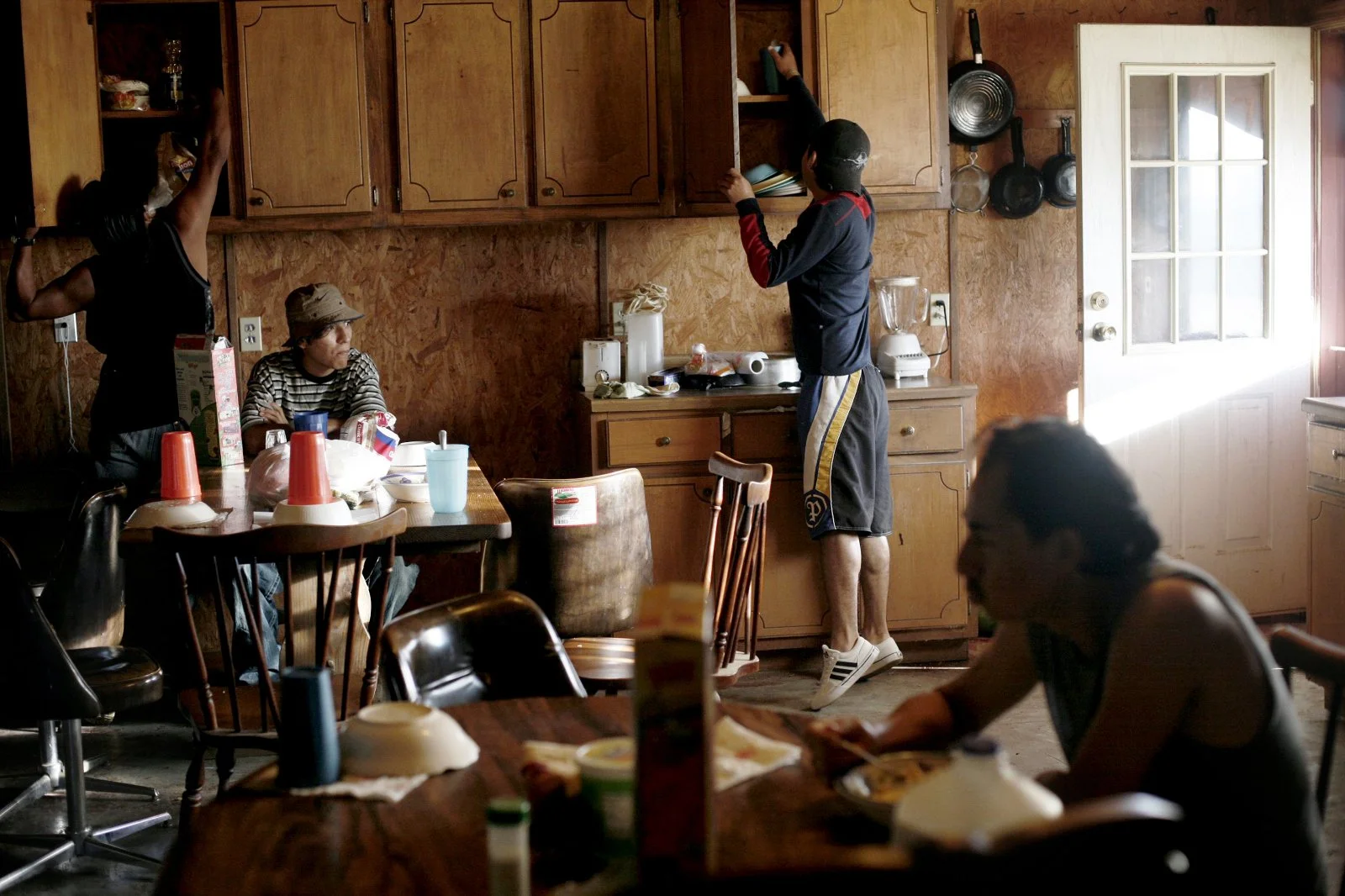
Guadalupe watches out the window while Spanish-language television plays during the chaos of morning in the migrant workers house. Guadalupe was the newest worker on Barber farm. He was working on paying off loans for the travel expenses here before he will begin saving for his second year of college.
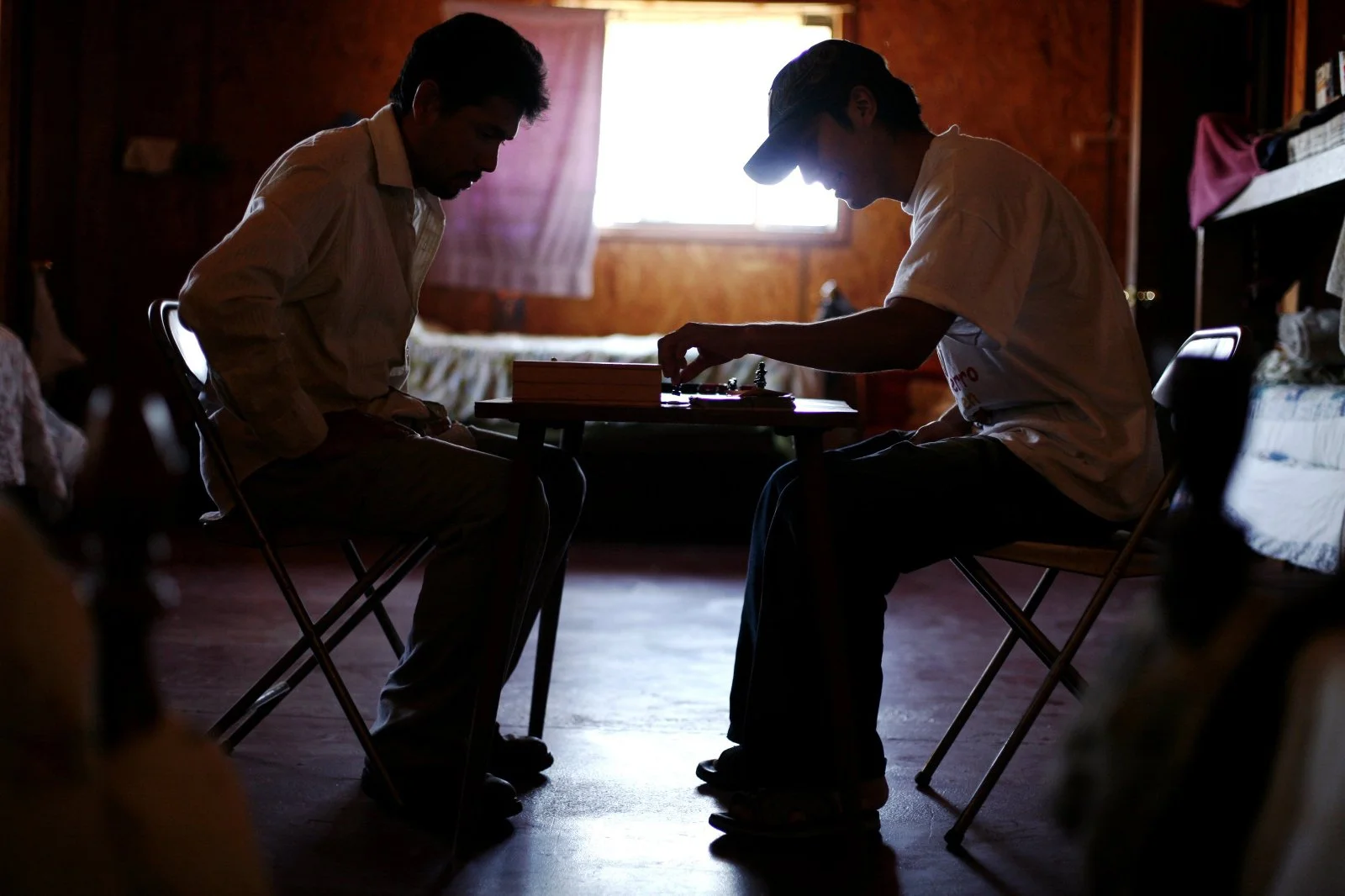
Castillo and Guadalupe use their new chess board given to them by Chad Barber, to replace their smaller one before starting work in the potato fields. Barber occasionally plays with the men. “He my teacher,” said Gaudalupe about Rodriguez.
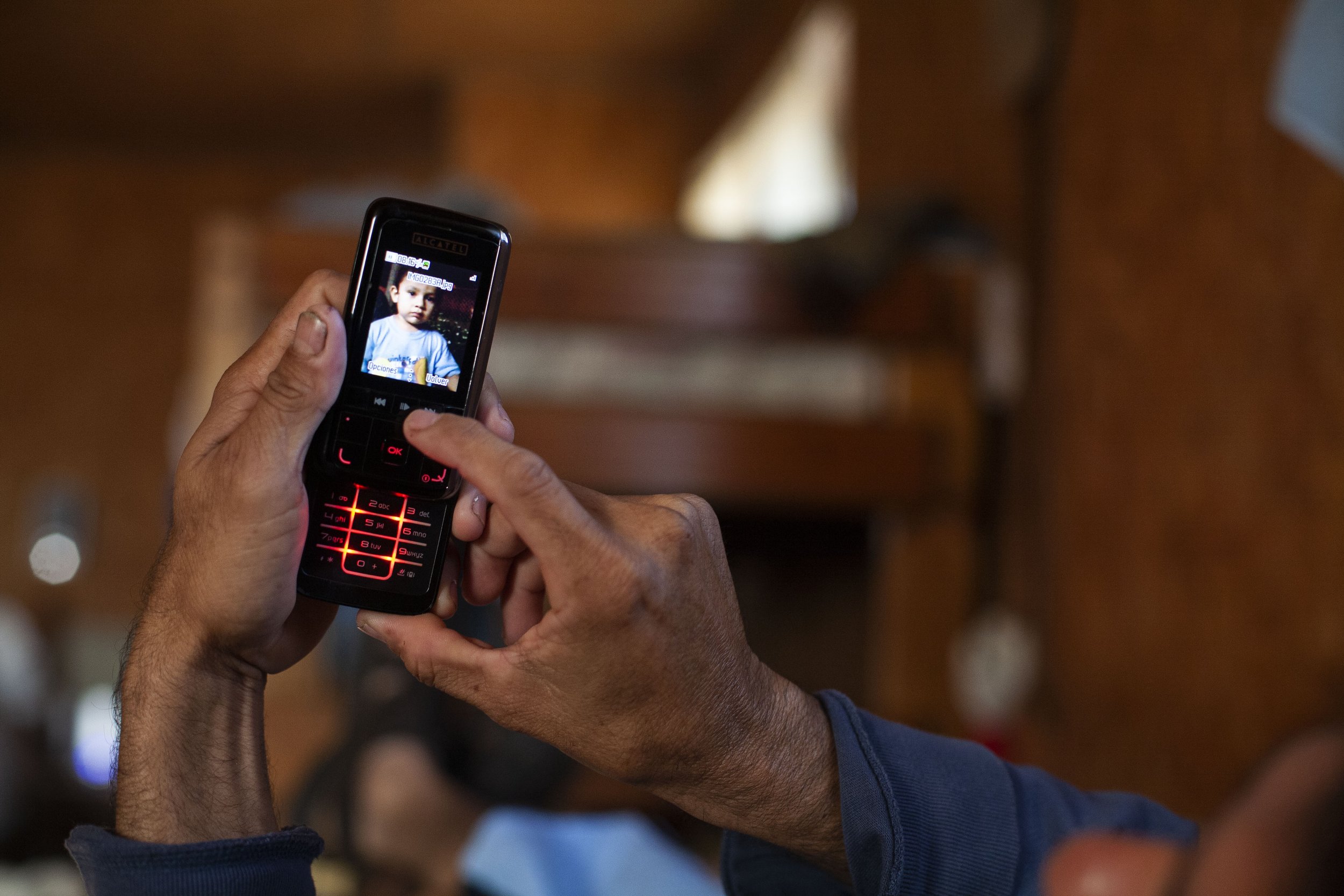
Angel Rodriguez Castillo, looks at a photo of his son Maximo, 1, on his birthday.
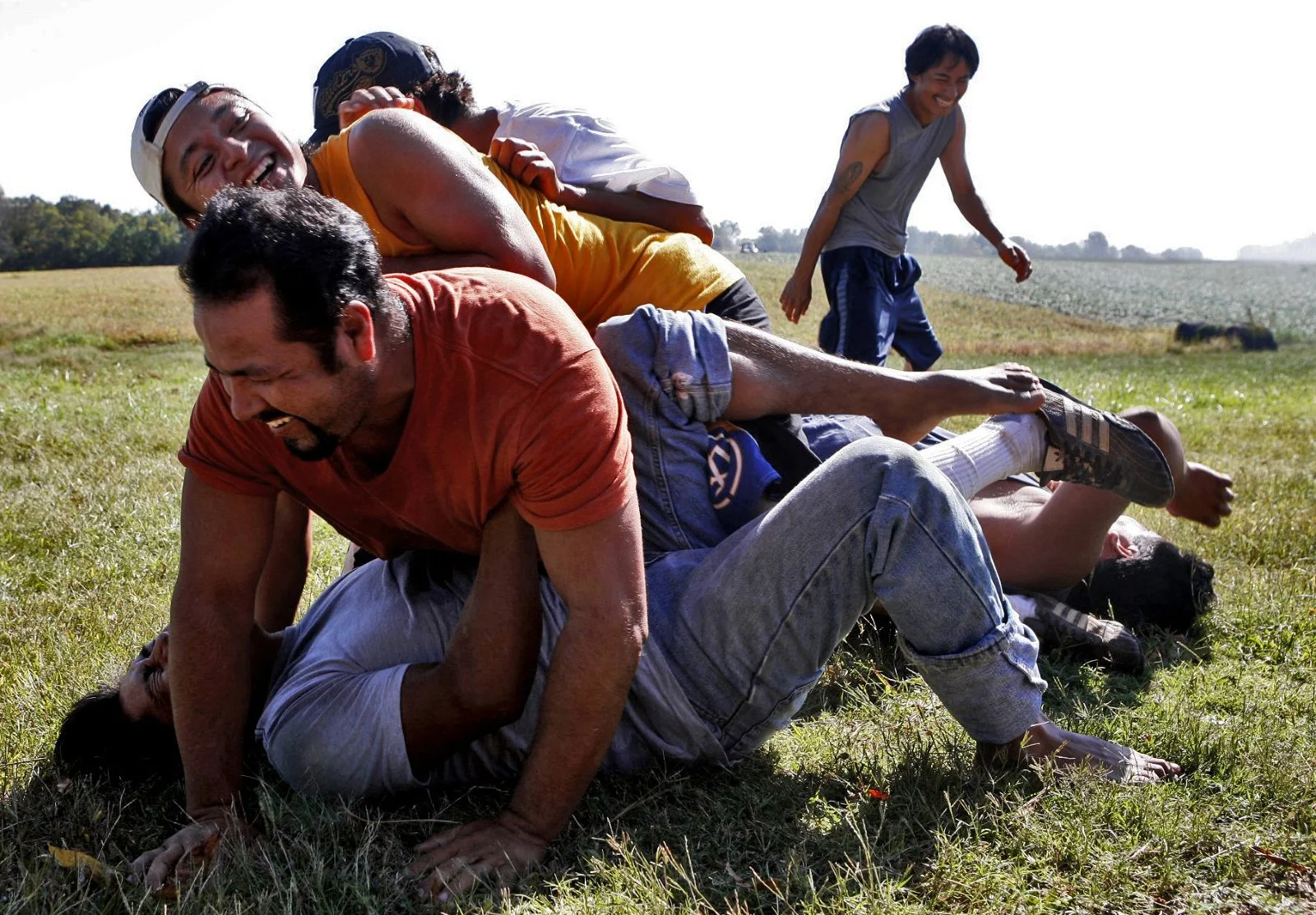
During a slow day several of the men pass the time with the soccer ball. Martinez, curls up on the ground outside of their home after being accidentally kicked in the groin. In an effort to cheer him up Carlos Gomora, jumps on top of him and others followed suit.
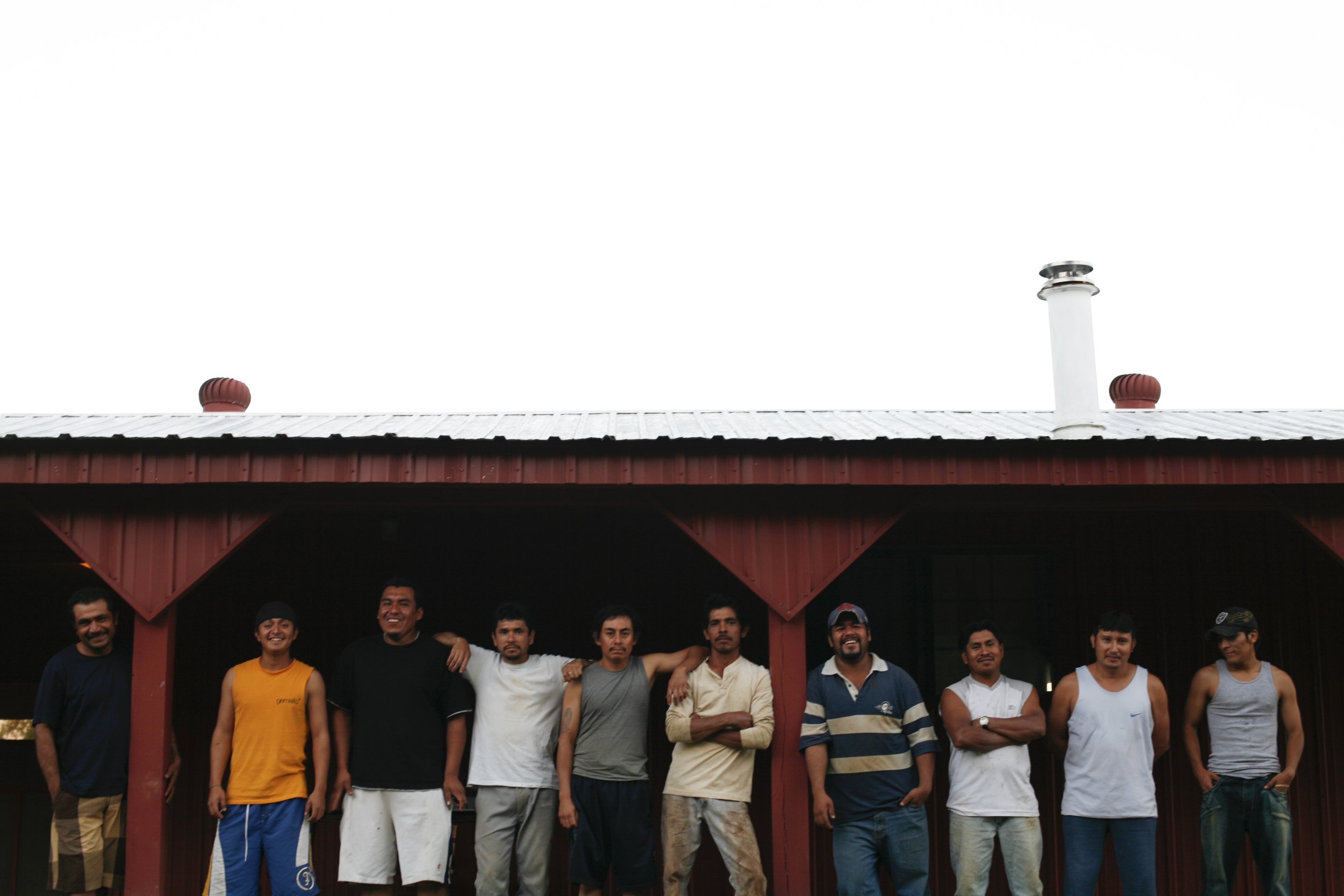
Migrant workers pose for a photo outside their dwelling
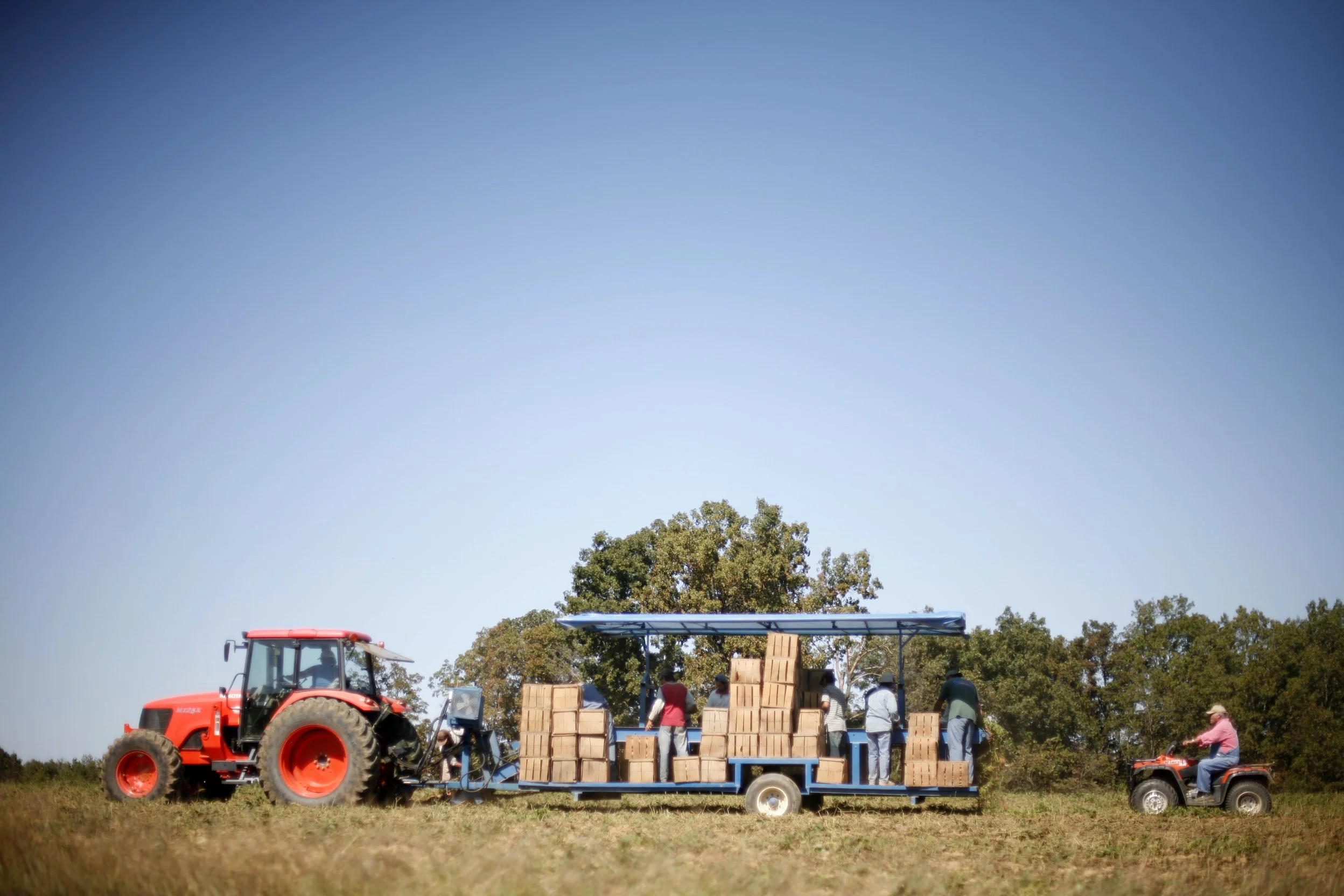
Jerry Barber follows in a tractor as migrant workers pull potatoes off the picker.
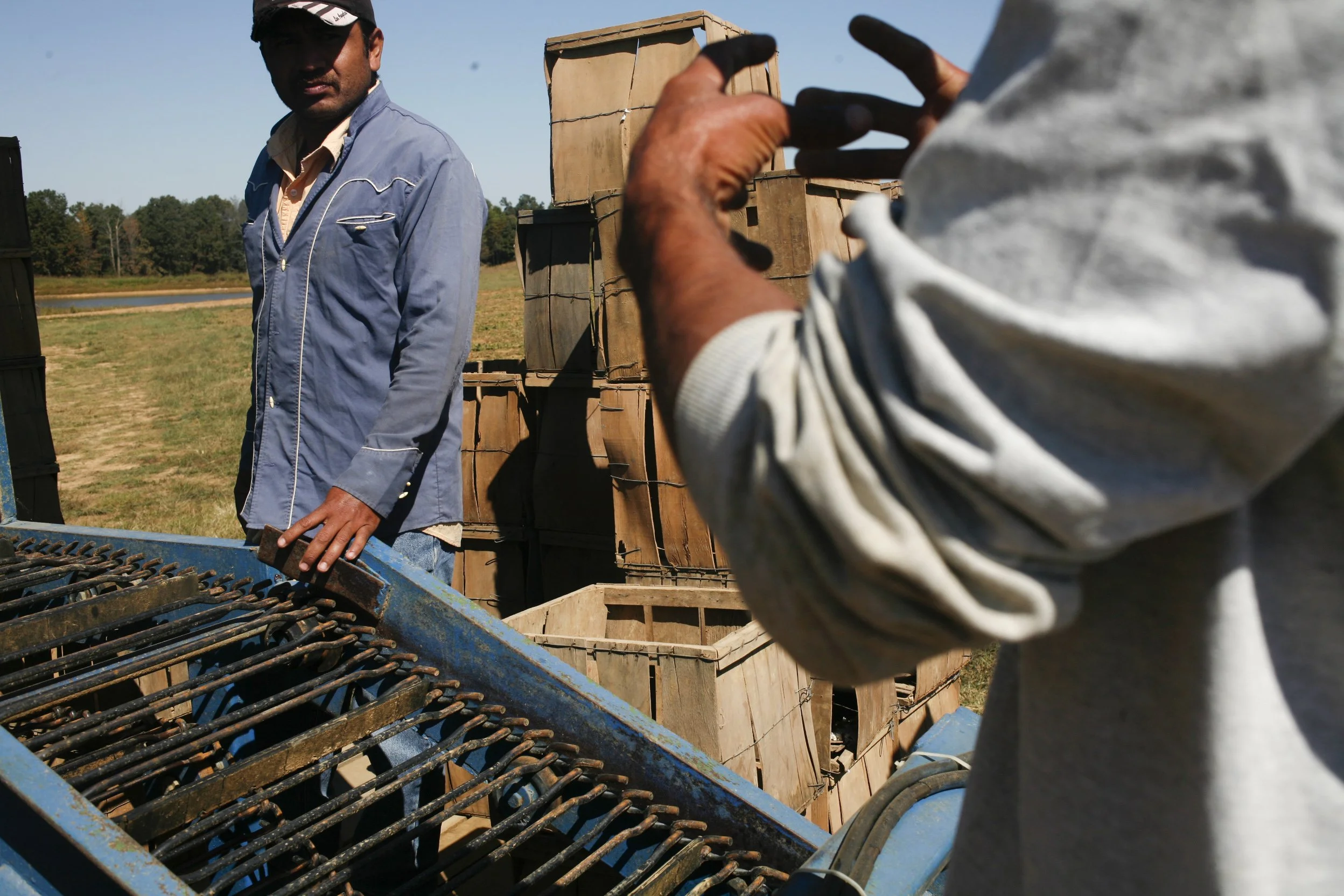
After working with migrant workers from Mexico for the last 11 years, Jerry Barber still communicates using hand signals.
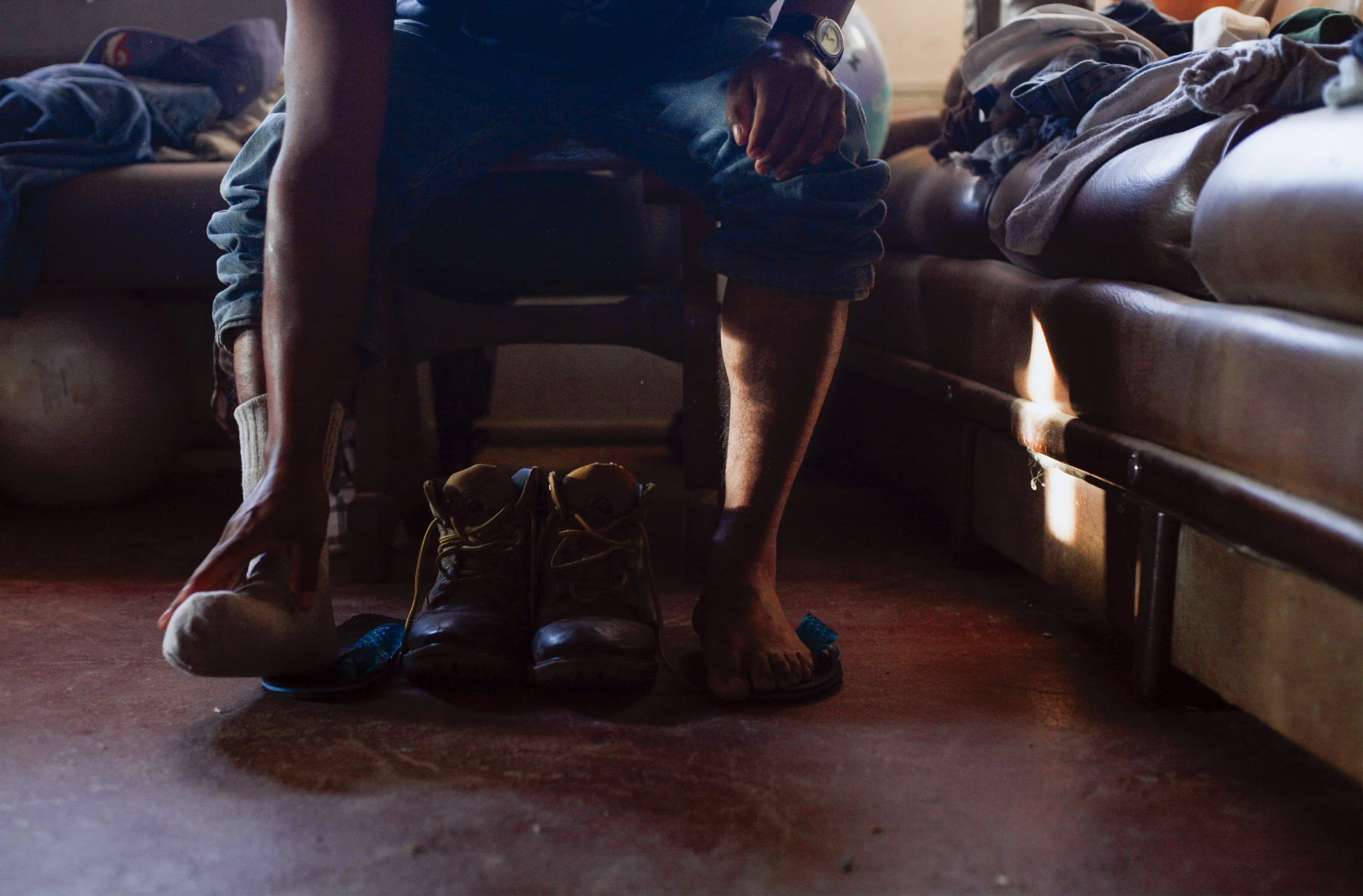
A migrant worker takes off his shoes after working.
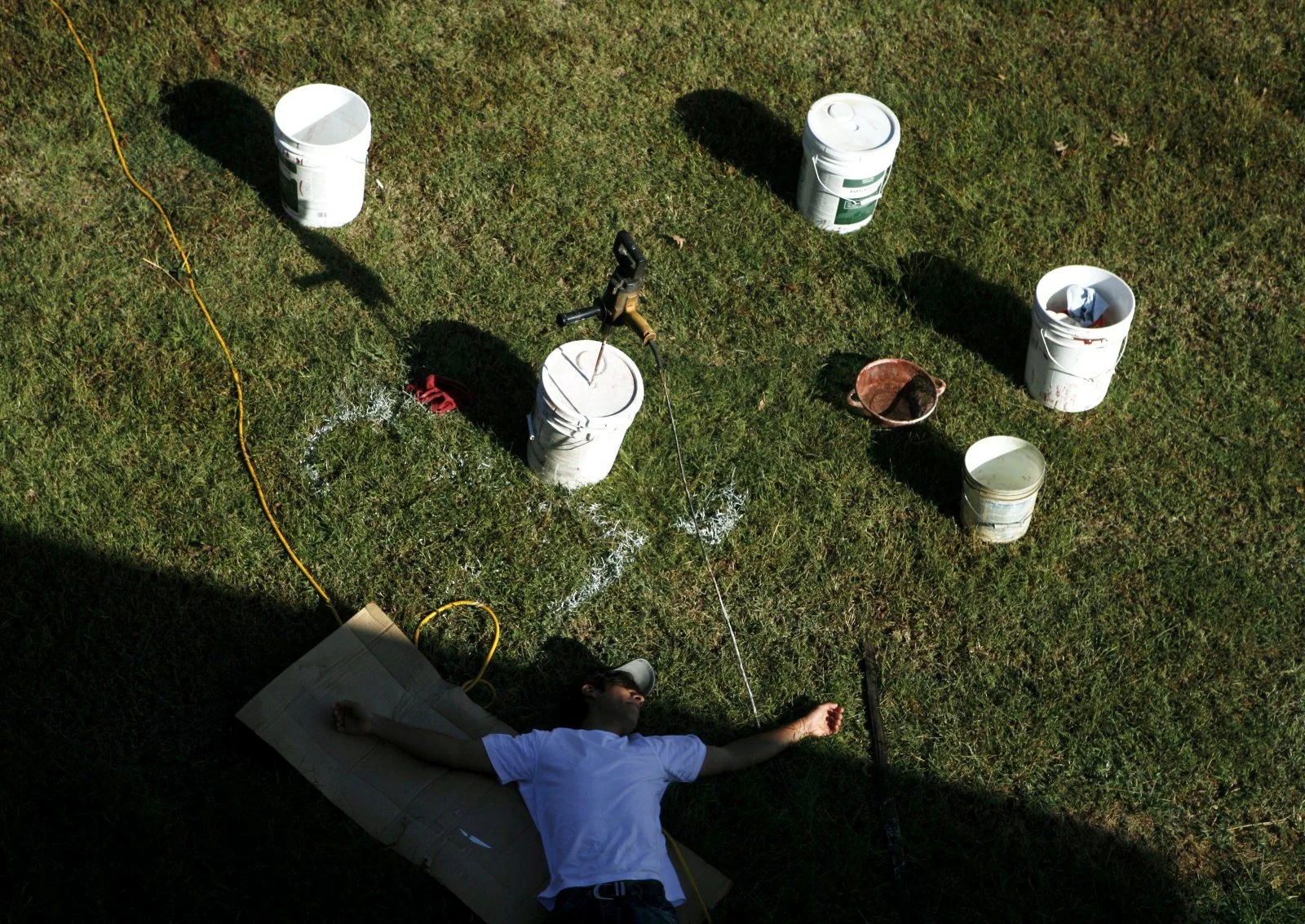
Guadalupe, the rookie of the farm, finished scraping rust off the barn and waits for the other men to be done so they can take a lunch break.
Wedged above the workers’ bunk beds and pressed in their wallets are pictures of wives and children far away. Inside the house, the television is tuned to Spanish-language programming, someone is almost always cooking, and laughter echoes through the space.
Lino Cortes has four children: One attends university, one works in North Carolina, and two others are still in school in Mexico. Cortes’ labor in the United States allows him to send home about $150 weekly. That money will help his youngest go to college. “Maybe they would come to visit me here,” the proud father said, but neither will need to move to the United States for good jobs, “because they will have finished university.”
The long bus journey to Mayfield, and workdays as long as 12 hours, don’t bother Jose Guadelupe. Savings from his U.S. earnings will help him finish college in Mexico. He talks to his mother on his cell phone once or twice a week. Guadelupe characterized his relations with Jerry as distant. The men stay on the Barber property almost all the time, but the owner doesn’t come around much during their off hours. They’re only permitted to go into town on Sundays.
Neither Jerry nor his son Chad speaks much Spanish, and few of the migrant workers speak much English, so most communication about farm tasks happens through a combination of a few words and many gestures. “You show them one time, and you can go off and leave them in the field,” Chad Barber said.
The men have faith that hard work will earn them and their families better lives in the future. “We work, and wait,” said Guadelupe.